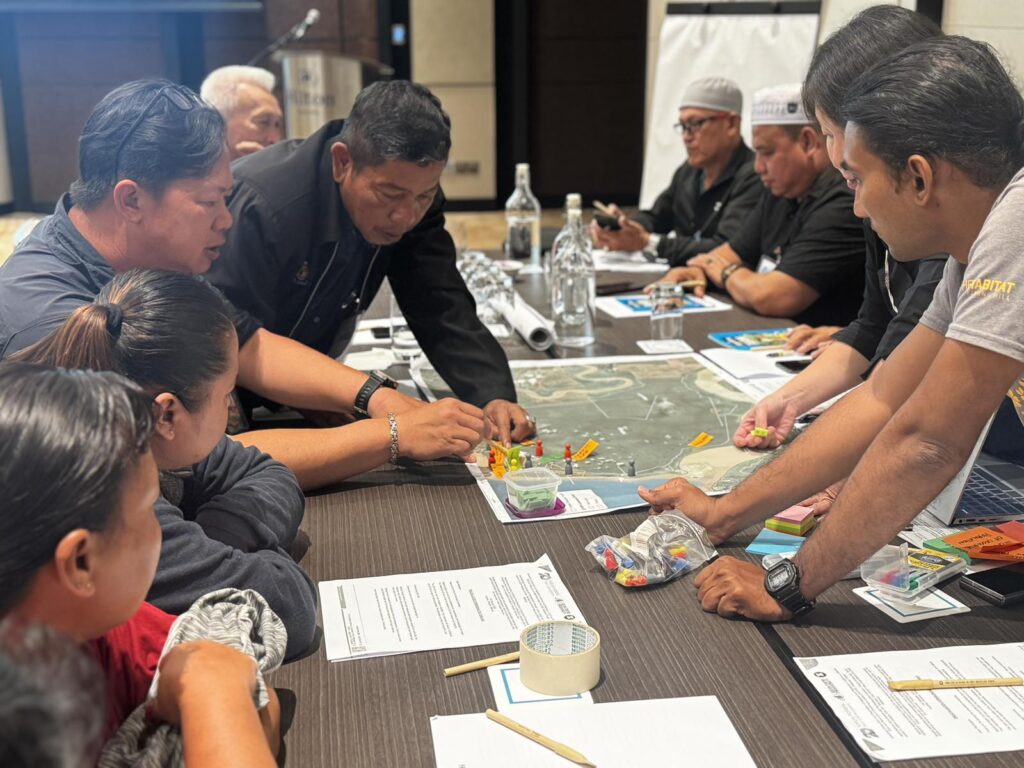
Key stakeholders of the EnCORE Wetlands Project in Agusan Del Sur, Philippines, and in Sarawak, Malaysia, participate in a series of activities and discussions geared towards the development of site-level social and environmental safeguards.
The ASEAN Centre for Biodiversity (ACB), through the Enhancing Conservation and Restoration of Wetlands and Peatlands in ASEAN as Effective Sinks and Reservoirs of Greenhouse Gases (EnCORE Wetlands Project) funded by the UK Mission to ASEAN through the ASEAN-UK Green Transition Fund, recently conducted a series of site-level social and environmental safeguards workshops. This is to ensure that the project promotes positive change, transparency, fairness, and participation among its project stakeholders in select wetlands and peatlands in Malaysia and the Philippines.
Held from 12 to 16 January in Agusan Del Sur, Philippines, and from 2 to 6 February in the City of Kuching, Malaysia, the workshops offered a platform to consult local stakeholders, including representatives from the government, Indigenous Peoples, and local communities, in developing essential safeguards contributing to the Project’s Intermediate Outcome 3.
“It is important for the EnCORE Wetlands Project to contribute to the improvement of alternative nature-based economic opportunities in local communities,” says Mr. Michael Joseph Jaldon, EnCORE Wetlands Project Manager. “This is essential in decreasing pressures on wetlands and peatland ecosystems, helping these natural resources to continue providing critical ecosystem services and offering sustainable benefits for both people and the planet,” he continued.
Wetland and peatland ecosystems offer essential ecosystem services for the sustenance and livelihood of local communities, but they are often underappreciated and undervalued. This leads to widespread degradation of these ecosystems, transforming these natural carbon sinks into major carbon emission sources and undermining regional and global climate mitigation efforts.
Representing Protected Area Superintendent Sherrilyn Vasquez of the Agusan Marsh Wildlife Sanctuary (AWMS) Protected Area Management Office, Harold Jay Sumilhig, shared the importance of the AWMS in the lives and culture of surrounding Indigenous communities. “It is important that any conservation effort is inclusive, rights-based, and responsive,” he said. “Through this workshop, we hope to deepen our shared understanding of the safeguards ensuring that development, conservation, and management interventions do not harm but promote equity, resilience, and sustainability,” he added.
One of the Indigenous communities represented during the workshops in Agusan Del Sur was the Bunawan Manobo Ancestral Domain Management Council, which manages the Certificate of Ancestral Domain Title No. 136, an indigenous land claim title for the Manobo people in the municipality of Bunawan. Ancestral Domain Management Officer Elvira Catuburan says that participating in such activities is important for them to learn and discuss how to sustainably and innovatively develop livelihoods in the area. “We are interested in exploring opportunities to develop more products from unaw (sago starch) derived from a kind of palm tree abundant in our area. We are also looking at improving our dried fish industry and seeing if we can produce chips, cracklings, or even bottled gourmet dried fish in oil. We need training and support from our local government to do this and to solve threats to fish supply caused by invasive species,” she shared.
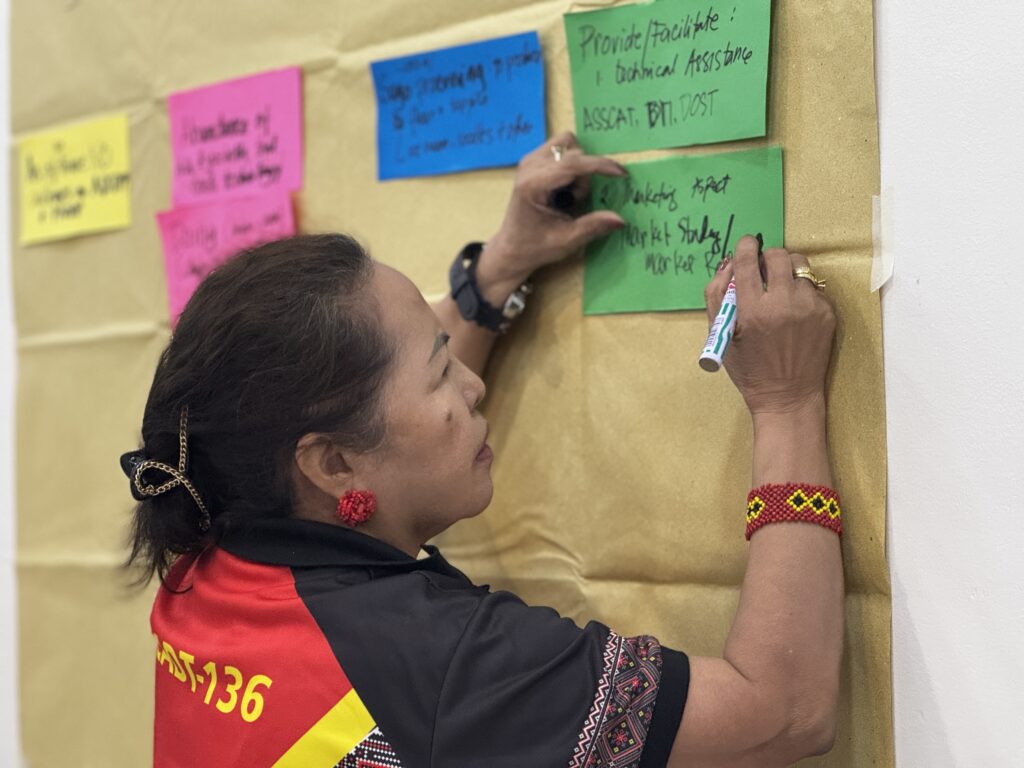
Ancestral Domain Management Officer Elvira Catuburan participates in an exercise that maps out challenges, opportunities, and other needs that contribute to access and benefit sharing, ensuring fairness and equity for Indigenous Peoples and local communities near the Agusan Marsh Wildlife Sanctuary.
During the opening session of the workshops in Malaysia, the ACB Biodiversity Conservation Division Director Amiel Sarne encouraged the participants to openly provide inputs for the social and environmental safeguards and advocacy plan being developed for Maludam National Park. “Through this workshop, we directly contribute to empowering Indigenous Peoples and local communities to implement a site-level nature-positive economy through climate-smart biodiversity-based activities, products, and services. This approach is at the heart of both the Kunming-Montreal Global Biodiversity Framework and the ASEAN Biodiversity Plan. By integrating these principles into our work, we do not just protect our natural resources, but we also strengthen the foundation for a sustainable and resilient future,” he shared.
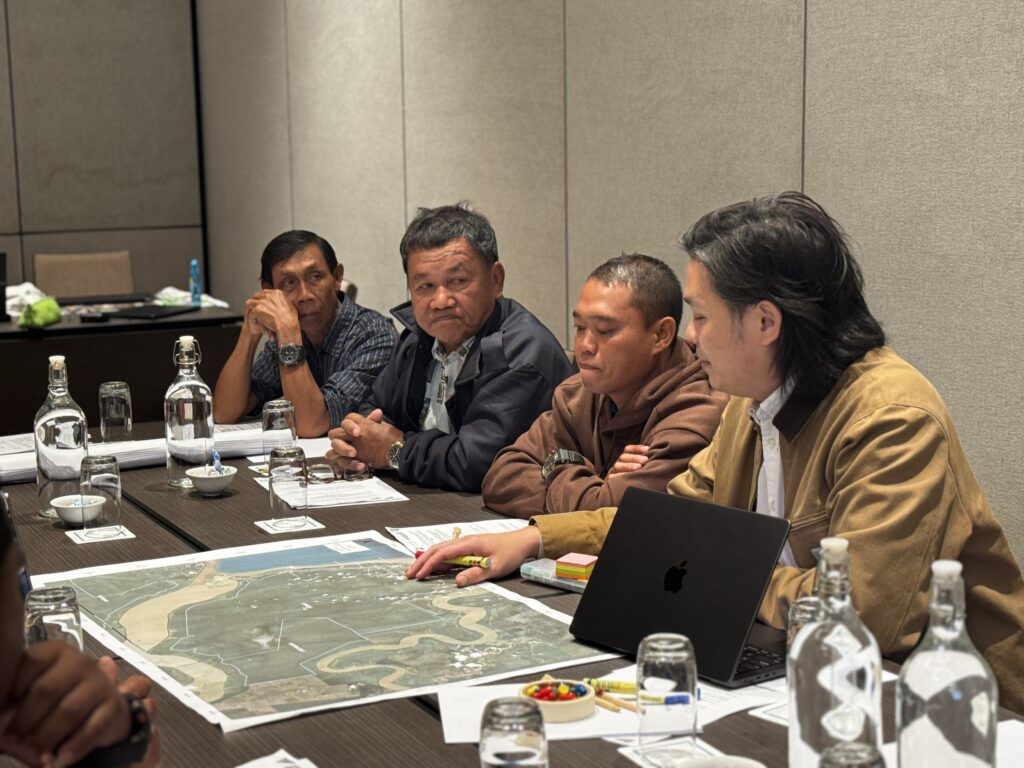
Representatives from Indigenous communities surrounding Maludam National Park have listed human-wildlife conflicts and coastal erosion as some of the issues faced by the national park.
“Maludam National Park has opened livelihood opportunities for us, especially through tourism. It is important for me to take part in these workshops so I can understand the issues the national park is facing and provide input on behalf of Kampung Tanjung Baru. It is our responsibility to protect Maludam, as it offers a lot of potential for improving and diversifying Iban livelihoods,” says Mr. Jupa, a boatman living in a longhouse near the access to Maludam.
The EnCORE Wetlands Project is being implemented by the ACB in partnership with the Global Environment Centre. The project aims to create science-based and practical methods to protect carbon-rich ecosystems such as wetlands and peatlands to protect biodiversity in the region.