KUCHING, Malaysia and AGUSAN DEL SUR, Philippines — In a significant step towards biodiversity conservation and reducing carbon emissions through nature-based solutions in Southeast Asia, the ASEAN Centre for Biodiversity (ACB), through the Enhancing Conservation and Restoration of Wetlands and Peatlands in ASEAN as Effective Sinks and Reservoirs of Greenhouse Gases (EnCORE Wetlands) Project successfully organised back-to-back collaborative action planning workshops in Maludam National Park (MNP), Malaysia, and Agusan Marsh Wildlife Sanctuary (AMWS), Philippines—two known critical peatlands in the Southeast Asia.
The workshops marked the culmination of previous consultation activities and feasibility studies conducted at the two pilot sites. Together with the Global Environment Center (GEC), the EnCORE Project Management Team (PMT) presented the findings to local stakeholders. These findings are to be translated into site-specific interventions, particularly micro-grant packages that aim to restore ecosystems while enhancing peoples’ livelihoods, and identified partner community-based organisations as co-implementors. These interventions will be implemented from July to November 2026, in line with the project’s remaining duration.
The said workshops reinforced the role of collaborative planning in strengthening peatland conservation by transforming scientific information into practical and adaptable community-driven actions to enhance climate resilience and support the long-term sustainable management of the two most ecologically significant wetland landscapes in the ASEAN region.
Strategies for Maludam National Park
As one of the EnCORE Wetlands Project’s pilot sites, the MNP plays a vital role in conserving one of the region’s largest peat swamp forests, making it a priority landscape for climate mitigation and biodiversity conservation.
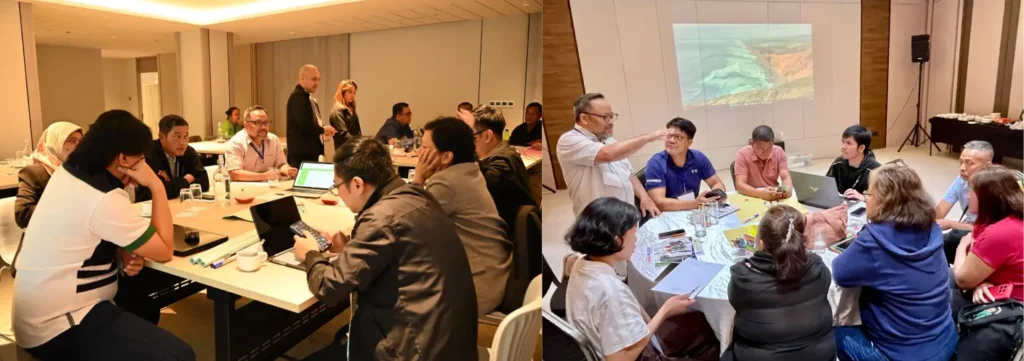
The Collaborative Action Planning Workshop with stakeholders from Maludam was convened from 24 to 25 June in Kuching, Sarawak. It brought together representatives from the Ministry of Natural Resources and Environmental Sustainability (NRES), the Ministry of Natural Resources and Urban Development (MUDeNR) Sarawak, the Sarawak Forestry Corporation (SFC), local administrative sub-district offices, and community leaders to strengthen the collaborative management of MNP.
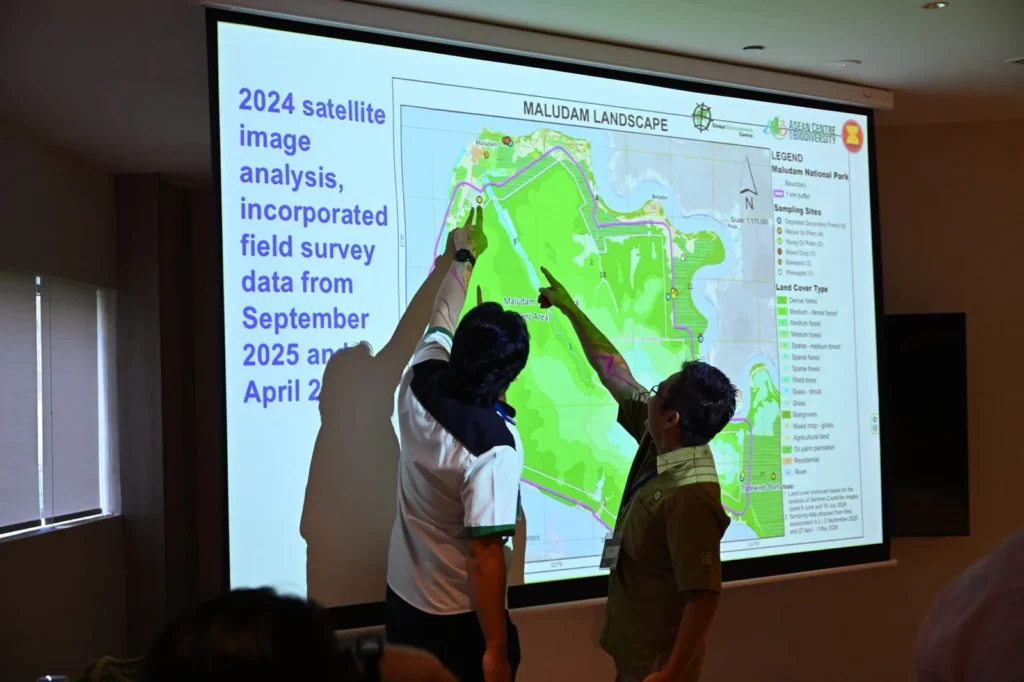
A key highlight of the workshop was the validation of land cover and carbon stock assessment results, which informed the identification of nature-based interventions and biodiversity-friendly livelihood strategies. Discussions also explored communication, education and public awareness (CEPA) initiatives to help reduce economic pressures on the park’s peatland ecosystems while promoting their long-term conservation.
NRES Representative Mr. Dzulhaili bin Dzulkarnain emphasised the importance of adopting a landscape approach to address peatland degradation, noting that collective action is essential to deliver long-term solutions that can enhance both community well-being and the sustainable management of the landscape.
Echoing this message, Ms. Corazon A. de Jesus, Jr., Acting Director of ACB’s Programmes Department, highlighted MNP’s significance as a critical conservation area for both Malaysia and the wider ASEAN region.
“Conserving and protecting any area is not an easy task. While regional and project support is vital, we will eventually leave. It is those who are living and working here who will stay behind and continue all of these efforts. This workshop is crucial to establishing a good understanding of how to complement each other’s actions toward having Maludam better conserved and better managed,” she said.
Building on the technical discussions, three community-led micro-grant packages were proposed. The first grant supports livelihood diversification through the cultivation of Licuala sp. (locally known as umbut palas) as a non-timber forest product. The second promotes CEPA through markers, physical signs, and social media content, highlighting peatland conservation and flood awareness. The third focuses on ecosystem restoration by strengthening peat fire prevention through the training of local volunteers and the provision of essential groundwater monitoring and fire response equipment.
Restoring the Agusan Marsh Wildlife Sanctuary
The other pilot site of the EnCORE Wetlands Project, the AMWS stands as one of the most important inland wetlands in the Philippines with diverse ecosystems such as freshwater swamp forests, peatlands, marshes, shallow ponds, and lakes. It is recognised as a Wetland of International Importance (Ramsar) and an ASEAN Heritage Park, establishing its role as one of the most outstanding wetlands in ASEAN.
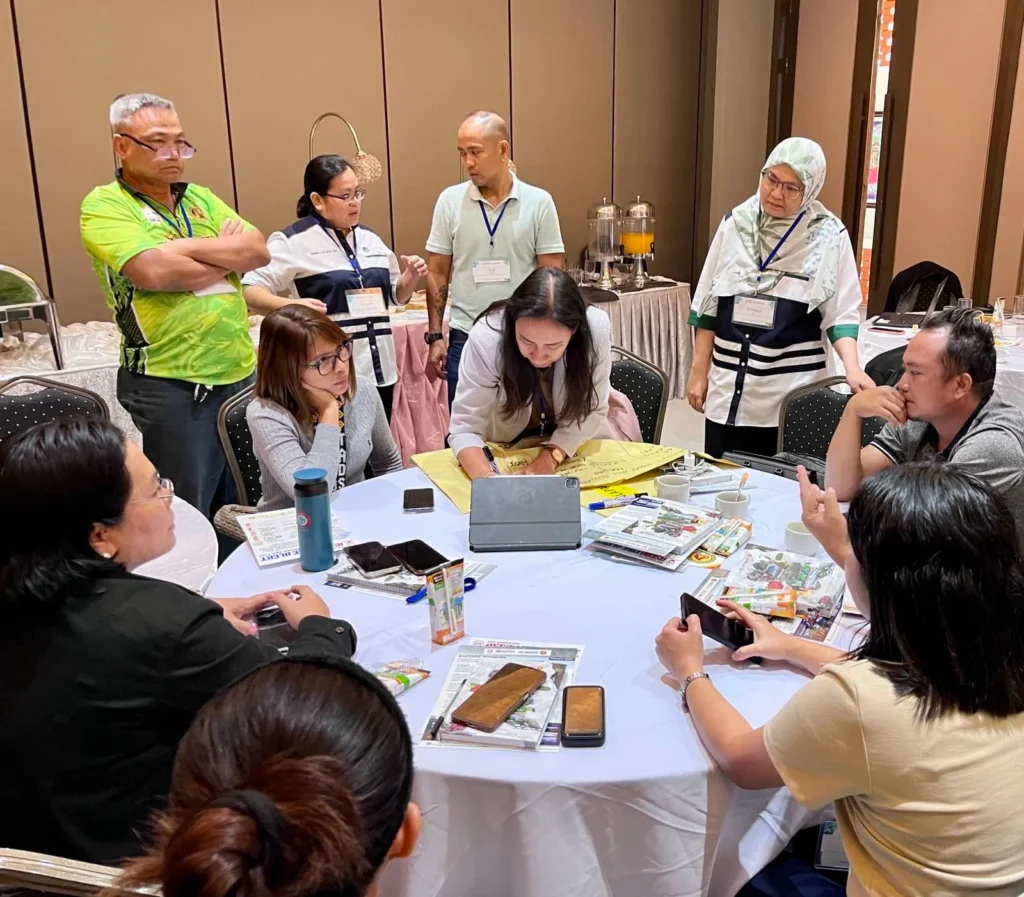
From 1 to 2 July 2026, the EnCORE Wetlands Project Team organised the collaborative action planning workshop for the Agusan leg, together with GEC. Participating in the workshop were representatives from the AMWS Protected Area Management Board, the Philippine Department of Environment and Natural Resources (DENR)-Caraga Region, Department of Agriculture, Office of the Governor, Municipalities of Talacogon, Bunawan, La Paz, Rosario, and San Francisco, members of select Indigenous Peoples’ groups, and the National Commission on Indigenous People in Agusan del Sur.
Mr. Michael Jaldon, EnCORE Wetlands Project Manager said, “We have only a little time left for the project, but we want to leave a lasting impression, and after this one, we want to move towards sustainability as well as we help the Agusan Marsh Wildlife Sanctuary.”
Mr. Harold Jay Sumilhig, Ecosystems Management Specialist II and Acting Planning Officer of the Protected Area Management Office of the-AMWS, affirmed that the activities under the EnCORE Wetlands Project are relevant to the AMWS management plans. Meanwhile, Acting Provincial Government Department Head of Agusan del Sur’s Provincial Environment and Natural Resources Office Mr. Rex Mel Acedillo, acknowledged current initiatives as relevant interventions and progress for the AMWS management. He likewise expressed partnership with their “big brother” the DENR, on future collaborative efforts.
Mr. Leo Dunstan David, Senior Programme Officer at GEC, presented key study findings revealing notable forest recovery and a significant decline in grassland cover within the AMWS. The study’s carbon stock assessments showed that while forests act as carbon sinks, grasslands generally release carbon dioxide. However, data also indicated that waterlogging causes carbon release across forest, paddy, and grassland ecosystems. To restore the area, recommendations included implementing canal blocks, reforesting fire-scarred areas, and maintaining high water levels to prevent peatland forest fires.
Additionally, the ACB proposed a number of nature-based solutions including riverbank stabilisation, riparian buffer restoration, and peatland paludiculture. Other proposed interventions were forest fire management, phytoremediation of forest corridors, hydrological protection via small water-permeable dams, rewetting peatlands, and biodiversity monitoring.
For the AMWS, the micro-grant packages based on all the consolidated findings would revolve around ecotourism enhancement, youth leadership development, and wetland restoration measures. Under the micro-grant package on ecotourism, proposed activities enhancing sustainability, accessibility, and visitor experience in the AMWS and by developing a community-led and market-ready ecotourism products and services for Lake Panlabuhan, the only established ecotourism destination in AMWS so far. Visitor safety and appreciation of the ecological and cultural values of the AMWS were also included. The Kinambaylan Bukogon Lumad Agusan Marsh Loreto Organization (KBLAMLO), a community-based peoples’ organisation, was the local group nominated as the beneficiary of the ecotourism package.
The restoration measures in Agusan will have two projects: the first will be on production training, procurement and planting of banaba (Lagerstroemia speciosa L.) seedlings and bamboo culm cuttings, and support to nursery operations. The said species were selected due to their conservation values, climate mitigation potential, significance in watershed protection, and viability in augmenting local livelihoods. The second restoration project will be the construction of canal blocks or check dams in Talacogon, due to the frequent occurrence of peat fires in the area, especially during the dry season. According to the GEC, the construction of canal blocks or check dams will not only address fire risks but will contribute to reducing greenhouse gas emissions and improving carbon storage of the AMWS. The GEC is set to conduct training on the construction of the canal blocks/check dams as a nature-based solution to be adopted by the local communities. Lastly, youth partnership on these initiatives will be crucial in raising awareness on the manifold value of AMWS, as well as empowering the youth as able partners and future leaders.
In both workshops conducted, the EnCORE Wetlands Project team will continue working closely with government agencies, local partners, and communities to refine the proposed interventions and support their implementation to ensure that initiatives are translated into tangible outcomes before the project concludes. The agreed actions are expected to complement the future management planning process for the MNP and the AMWS while reinforcing long-term peatland conservation, protection, and restoration of both sites which will lead to reduction of carbon emissions and increased climate resilience.