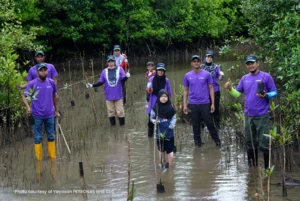
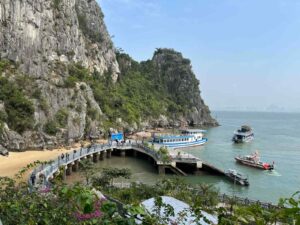
Wetland and peatland practitioners, mapping officers, and stakeholders from across the ASEAN Member States (AMS) engaged in capacity development in Brunei, featuring technical training in data management and monitoring (left) alongside educational visits to local wetland and peatland ecosystems (right).
BANDAR SERI BEGAWAN, Brunei Darussalam —The ASEAN Centre for Biodiversity (ACB), through the Enhancing Conservation and Restoration of Wetlands and Peatlands in ASEAN as Effective Sinks and Reservoirs of Greenhouse Gases (EnCORE Wetlands Project), funded by the UK Mission to ASEAN through the ASEAN-UK Green Transition Fund, conducted back-to-back capacity development activities to accelerate the conservation and restoration of carbon-rich peatlands and wetlands in Southeast Asia. From 28 March to 1 April 2026, wetland and peatland practitioners, mapping officers, protected area personnel, and stakeholders from across the ASEAN Member States (AMS) gathered for the Orientation-Training on Framework for Ecosystem Restoration Monitoring as part of KM GBF Target 2 and the Experiential Learning Exchange (ELE): Success Stories in Conservation, Protection and Restoration of Wetlands and Peatlands. This regional learning activity was hosted by Brunei through its Ministry of Culture, Youth and Sports and the Ministry of Primary Resources and Tourism, particularly the Forestry Department, and the University of Brunei Darussalam.
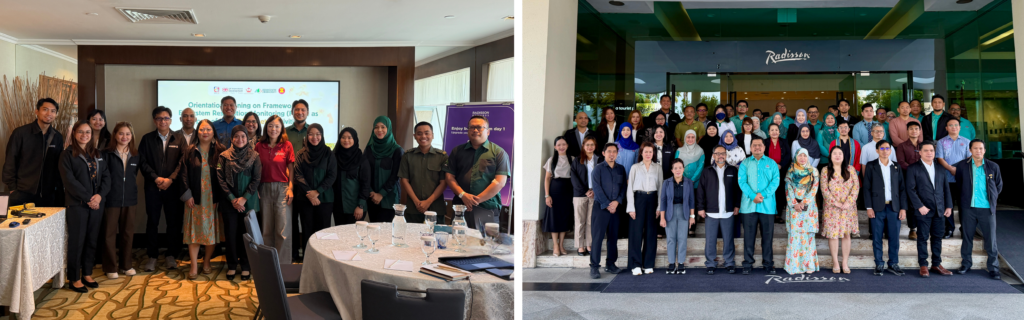
Participants of the Orientation-Training on Framework for Ecosystem Restoration Monitoring as part of KM GBF Target 2 (left) and the Experiential Learning Exchange (ELE): Success Stories in Conservation, Protection and Restoration of Wetlands and Peatlands (right).
Southeast Asia has almost two million sq. km. of wetlands. At present, there are 59 Wetlands of International Importance, or Ramsar sites, occupying a total land area of 26,592 sq. km. in 8 ASEAN Member States (AMS). The region is also home to 60 per cent of tropical peatlands and 42 per cent of mangrove forests in the world. Wetlands offer a multitude of indispensable services that sustain life and preserve ecological balance: they function as vital stop‑over sites for migratory waterbirds, nurture diverse flora and fauna, and provide rich feeding and breeding grounds for fish. They also cleanse soils, supply safe drinking water, and act as the world’s largest natural carbon reservoirs, positioning them at the forefront of climate-change mitigation. Moreover, wetlands buffer storm surges, flooding, and sea-level rise while underpinning food security, ecotourism, and alternative livelihoods that power the rural economies of ASEAN’s communities. These benefits intensify the need to restore and protect these vital ecosystems. Monitoring and reporting restoration efforts Target 2 of the global biodiversity targets, or the Kunming-Montreal Global Biodiversity Framework (KM GBF), calls upon nations to restore and preserve at least 30 per cent of the world’s degraded ecosystems by 2030. With less than five years to achieve this target, strategic monitoring and reporting of progress in realising this target are crucial in generating science‑driven metrics that reveal whether the world is on the right track to hit the 30 per cent mark. To this end, the FAO has developed an operational monitoring and reporting framework for the UN Decade on Ecosystem Restoration called the Framework for Ecosystem Restoration Monitoring, or FERM, as a reporting tool for the headline indicator under Target 2. “The FAO and the ACB spearheaded this training to enhance capacities in monitoring and reporting national ecosystem restoration initiatives. This will help provide you with hands-on technical assistance on data preparation that will be uploaded to the FERM registry, including step-by-step guidance on data integration and potential updating of the ASEAN Biodiversity Dashboard,” said Jerome Montemayor, Executive Director of the ACB, in his remarks during the workshop.
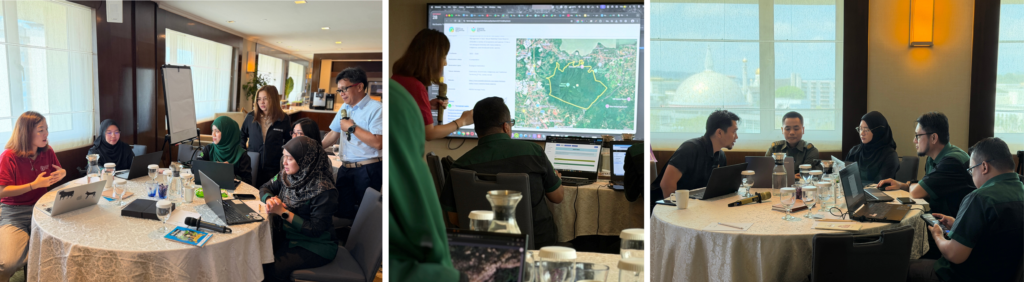
The Forestry Department of the Ministry of Primary Resources and Tourism received hands-on training on the FERM Registry, including data preparation using tools like QGIS and Google Earth Pro.
Successful ecosystem restoration hinges on the availability of precise, user‑friendly biodiversity data and its seamless exchange across sectors and borders. Such data lay the groundwork for establishing reference conditions, pinpointing key species and habitats, tracking the results of restoration work, and fine-tuning management strategies in real time—all while curbing redundant efforts and encouraging joint problem-solving. The ASEAN Biodiversity Dashboard, hosted by the ACB, embodies this model by consolidating species occurrence records, habitat maps and restoration metrics from every member nation into a single, openly accessible portal, offering policymakers and conservationists a unified view of regional progress. Learning from Brunei’s wetland and peatland restoration efforts Part of the back-to-back events are educational visits to some of the best wetlands and peatlands found in Brunei Darussalam—Tasek Merimbun Heritage Park, the only ASEAN Heritage Park in the country, Badas Peat Swamp, and Pulau Selirong Recreation Centre, the largest undisturbed mangrove forest of Brunei. “These ecosystems are among the most valuable natural assets in our region. They support biodiversity, enhance climate resilience, and serve as significant carbon sinks. Yet they face increasing pressures, making collaboration, knowledge sharing, and sustained management more critical than ever. For Brunei Darussalam, this programme is also an opportunity to share our experiences in managing carbon-rich ecosystems while reinforcing our role in regional cooperation on climate change and biodiversity conservation,” says Mr. Reni Bin Haji Yahya, Acting Director of the Department of Forestry, Ministry of Primary Resources and Tourism. During the site visits, wetland and peatland managers highlighted various lessons learned and good practices that have contributed to the country’s success in conserving these critical ecosystems. These include the strict protection and zoning of key wetland areas to prevent degradation; the use of advanced technology and science-based approach monitoring systems to track ecosystem health, including hydrological conditions in peatlands; biodiversity data collection in project sites; and the integration of conservation planning into national land-use strategies.
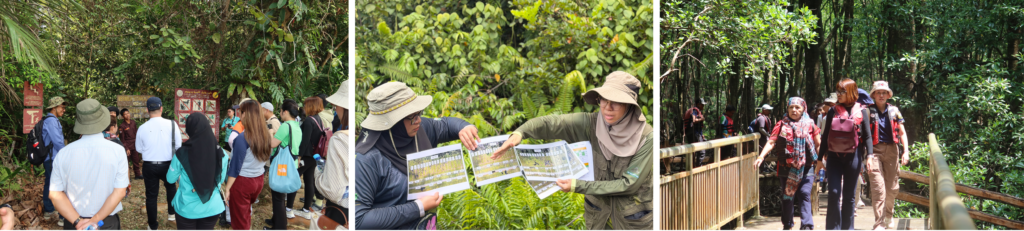
(L-R): ELP participants received hands-on learning about Brunei’s sustainable wetland and peatland management at Tasek Merimbun Heritage Park, Badas Peat Swamp, and Pulau Selirong Forest Recreation Park.
These knowledge-sharing activities highlighted the importance of integrating biodiversity conservation, ecosystem restoration, cultural heritage, and sustainable ecotourism across key ecosystems. At Tasek Merimbun Heritage Park, participants observed how rich cultural traditions are preserved alongside low-impact ecotourism and research explorations. Similarly, Pulau Selirong Recreational Park demonstrated the value of protecting pristine mangrove forests that contribute to coastal protection and carbon storage, while offering opportunities for ecotourism and biodiversity study. Insights on peatland restoration from the Badas Peat Swamp Forest further emphasised the importance of aligning policy with science-based research to effectively conserve peatland ecosystems. Participants learned how research initiatives led by University of Brunei Darussalam, support restoration efforts such as the planting of Shorea albida to enhance both above-ground and below-ground biomass in degraded areas. This learning visit is part of the Experiential Learning Programme, a flagship initiative of the ACB that facilitates sharing and co-learning of practical knowledge, skills, and lessons through immersion, observation, and hands-on training. -end