MUNTINLUPA, Philippines – As part of building Timor-Leste’s capacity for biodiversity conservation and information management following its accession to ASEAN in 2025, the ASEAN Centre for Biodiversity (ACB), in partnership with the Norwegian Ministry of Foreign Affairs through the ASEAN-Norway Sectoral Dialogue Partnership, has launched the project titled Data Mobilisation Support for Timor-Leste towards the Enhancement of the ASEAN Biodiversity Dashboard (ABD).
The six-month capacity-building project aims to strengthen the science-policy interface in biodiversity governance in Timor-Leste through informed and science-based decision-making, supported by effective and efficient biodiversity information management in the country. In addition to a national workshop and a consultation series, the project will also include a technical training workshop on biodiversity data mobilisation, with hands-on training on Darwin Core Standards and other tools, such as GIS software, the Integrated Publishing Toolkit, and OpenRefine.
“This project seeks to ensure that Timor-Leste’s biodiversity knowledge is part of that regional picture. The data and expertise already exist within your institutions. The role of the ACB is to work alongside you, to build capacity where it is needed, and to shorten the path from data to decision,” shared ACB Acting Director for Programmes Corazon De Jesus, Jr.
Attending the project launch, Ambassador of Norway to ASEAN Mariann Ruud Hagen said, “This project is not only about improving technical systems but also about ensuring that Timor-Leste can fully participate in ASEAN’s collective efforts to conserve the region’s rich biodiversity.” She also added that the project reflects shared priorities under the ASEAN–Norway Practical Cooperation Areas 2026–2030, particularly environmental protection and technical assistance to support Timor-Leste’s integration into ASEAN.
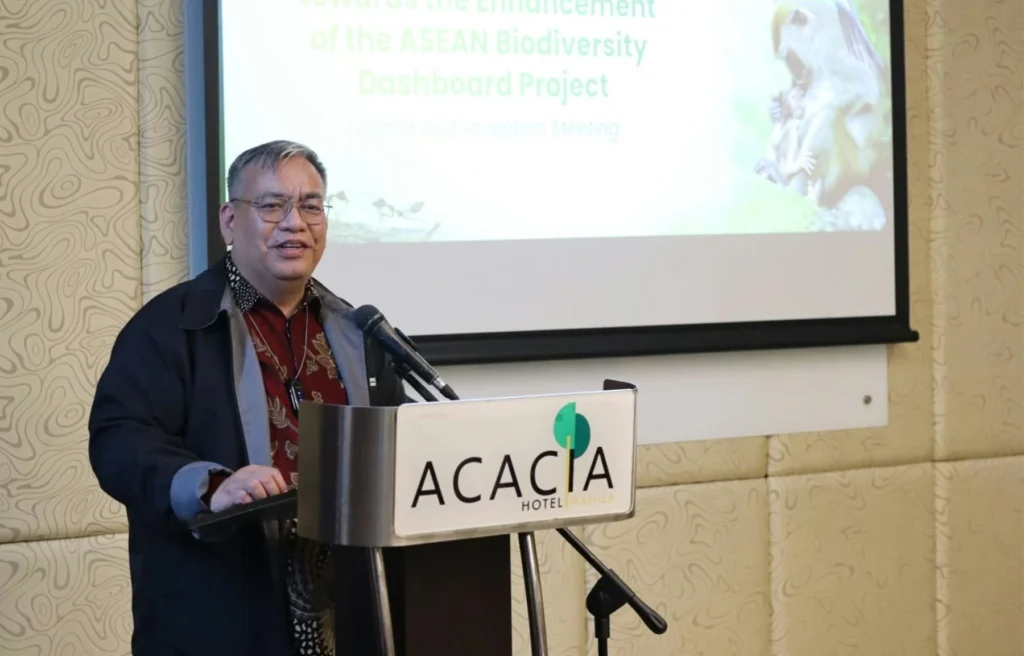
In his short message, ACB Executive Director Dr. Jerome L. Montemayor highlighted the importance of the project in achieving global and regional goals. “Now halfway through the implementation of the Kunming-Montreal Global Biodiversity Framework and the ASEAN Biodiversity Plan, we must accelerate all actions to reach our goal by 2030. It is high time to expand and strengthen our collaboration at various levels—reinforce inter-agency cooperation, encourage more stakeholder participation, and establish reliable data-sharing agreements, especially with the newest ASEAN Member State, Timor-Leste, and all its national and subnational agencies,” he said.
Even before Timor-Leste’s official entry into ASEAN on 26 October 2025, the ACB has already been supporting Timor-Leste in its biodiversity data management needs. “The ACB remains committed to providing continuous technical support to this cooperation through various tools and approaches in support of our role as a Technical and Scientific Cooperation Support Centre for the implementation of the KMGBF,” Dr. Montemayor added.
Data-driven decision tools
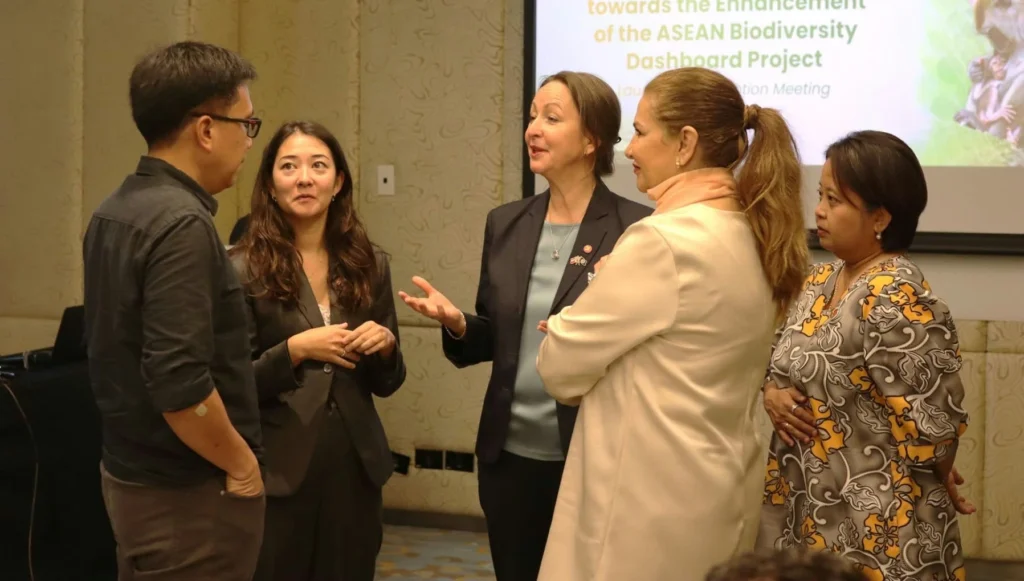
An inception meeting followed the project launch. It was an opportunity to discuss specific project details, its timeline, and Timor-Leste’s existing datasets, institutions, and priorities for mobilisation. More importantly, it explores how data from Timor-Leste can be integrated into the current features of the ABD while maintaining standards and meeting its requirements.
The ABD is a flagship initiative of ACB that harnesses current datasets to streamline regional target tracking and reporting. It serves as an open-access, web-based platform that provides near real-time, credible data products, visualisation, analytics, and access to biodiversity-related datasets across the ASEAN region. By integrating ecological observations, species occurrence data, ASEAN Heritage Parks, protected areas information, and biodiversity indicators from ASEAN Member States, the dashboard will support evidence-based decision-making, capacity building, and regional reporting obligations. It also integrates complementary technologies such as remote sensing, geographic information systems (GIS), and biodiversity informatics. It highlights the importance of standardised data protocols, the use of Essential Biodiversity Variables (EBVs), and alignment with global frameworks, including the Kunming-Montreal Global Biodiversity Framework (KMGBF).
According to the ACB’s Acting Biodiversity Knowledge Management Director, Christian Elloran, “Building on the ACB’s earlier support for the development of Timor-Leste’s National Clearing House Mechanism in 2011, we hope this project will strengthen the science-policy interface in Timor-Leste by building capacity in biodiversity data mobilisation and information management. This integration is essential not only for the country’s national-level planning but also for the collective success of ASEAN’s regional biodiversity conservation mandate.”
Planning workshops will be held at the ACB Headquarters after the project launch and inception meeting.