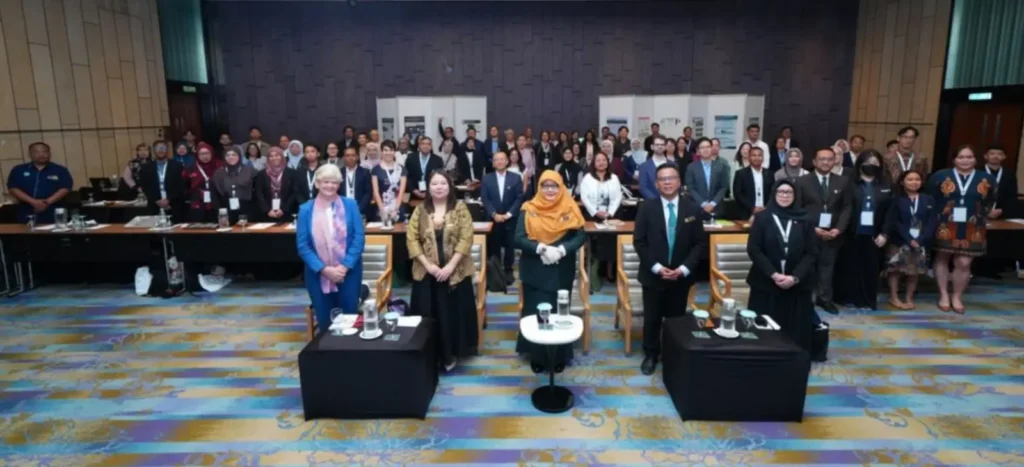
KUALA LUMPUR, Malaysia—With the theme “Advancing Biodiversity Enhancement in ASEAN: Science-Based Pathways for Climate Mitigation and Ecosystem Restoration,” the ASEAN Centre for Biodiversity, in partnership with the Ministry of Natural Resources and Environmental Sustainability (NRES) and the Forest Research Institute Malaysia (FRIM), organised the fourth Biodiversity Science Forum from 30 September to 1 October 2026.
Funded by the ASEAN-UK Green Transition Fund through the project Enhancing Conservation and Restoration of Wetlands and Peatlands in ASEAN as Effective Sinks and Reservoirs of Greenhouse Gases (EnCORE Wetlands), the regional forum brought together more than 80 experts, researchers, biodiversity practitioners, policymakers, and youth for a two-day knowledge exchange and conversations that seek to bridge the gap between research and practical solutions towards enhancing biodiversity in the Southeast Asian region.
The 2026 BSF featured keynote presentations and scientific posters revolving around four themes: 1) Biodiversity Assessment, Monitoring, and Emerging Science, 2) Biodiversity Enhancement and Ecosystem Resilience, 3) Climate Mitigation and Nature-based Solutions, and 4) Restoration Science and Practice.
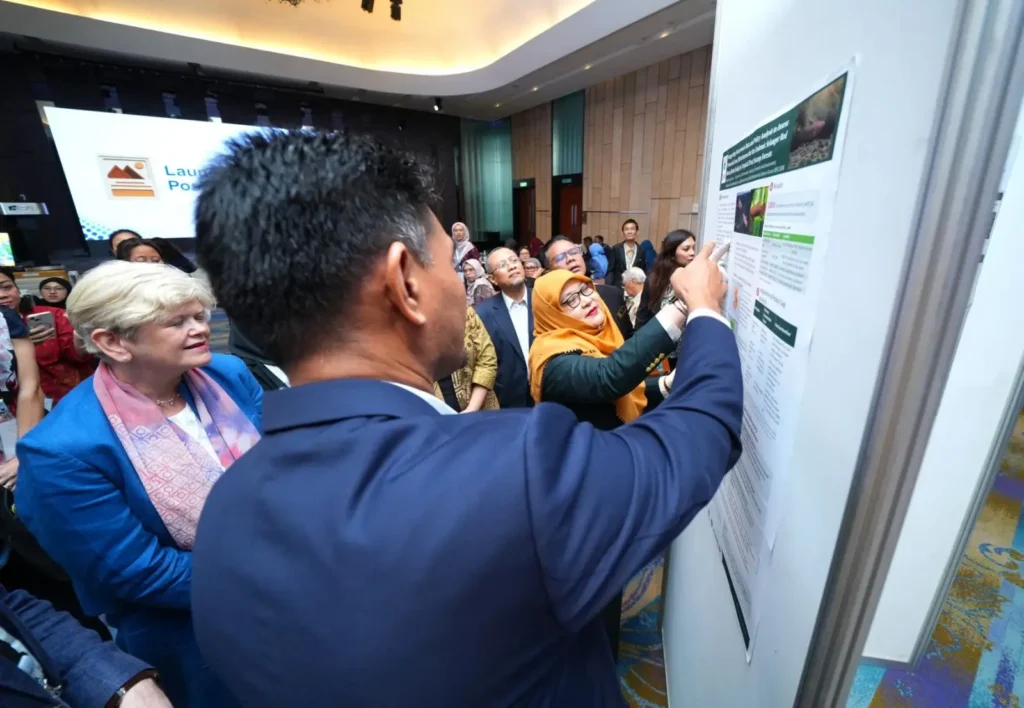
In her welcome remarks, H.E. Datuk Wira Anis Rizana Mohd Zainudin, Secretary General of the Ministry of Natural Resources and Environmental Sustainability of Malaysia (NRES), emphasised the importance of linking science to action. “Technology alone will not conserve biodiversity. Data alone will not restore an ecosystem. And a scientific paper, however excellent, will have limited impact if its findings never reach those making decisions on the ground. This is why I believe the real strength of the Biodiversity Science Forum lies not simply in presenting good science. Its value lies in connecting science with action. It brings researchers into conversation with policymakers. It connects emerging technologies with practical conservation needs,” she said.
Speaking on behalf of Dr. Jerome L. Montemayor, ACB Executive Director, Ms. Pamela Q Reblora, Director for Communication, said in her opening remarks that “Science is not merely a tool in biodiversity conservation; it is the foundation of all conservation actions. It is the catalyst that transforms scientific data into well-informed policies and to practical actions that bring lasting impact to the lives of ASEAN communities that fully depend on nature for their day-to-day needs.“
Secretary General of ASEAN Dr. Kao Kim Hourn delivered his message of support through a pre-recorded video message. He commended the Forum for linking science and policy built on technical cooperation, shared learning, and adaptive management. “This Forum brings together experts, researchers, policymakers, practitioners, youth, and representatives of Indigenous Peoples and local communities. That mix is its own opportunity: to exchange knowledge, strengthen the link between science and policy, and find practical, evidence-based solutions that can be scaled across ASEAN,” he said.
The British High Commission Kuala Lumpur, represented by Ms. Marie-Claire Joyce, Growth & Economic Counsellor, affirmed the UK’s role to support ASEAN’s initiatives on climate and nature. “Through the ASEAN-UK Green Transition Fund, we are supporting a portfolio of initiatives that strengthen the evidence base for nature-based solutions, improve understanding of ecosystem restoration, support climate mitigation efforts, and explore pathways for scaling investment into nature-positive outcomes. One example is the EnCORE Wetlands project, implemented with the ASEAN Centre for Biodiversity in partnership with the Global Environment Centre”, she said in her remarks.
The BSF is part of the ACB’s role as one of the technical and scientific cooperation support centres in Asia for the implementation of the Kunming-Montreal Global Biodiversity Framework of the UN Convention on Biological Diversity. This year’s forum fostered dialogues from biodiversity protection to driving species and ecosystem recovery. At the same time, it also elicits recommendations for the upcoming ASEAN Biodiversity Outlook 4, the flagship regional scientific publication of the ACB that tracks progress and status of ecosystems.
SAC Meeting
The 12th Scientific Advisory Committee (SAC) of the ACB is held on 2 October, immediately after the BSF. SAC members from across the ASEAN Member States with expertise in the various fields of biodiversity conservation will convene to provide scientific guidance to the Centre. The SAC was originally formed in 2008 to guide the ACB Joint Research Initiatives. It was then reactivated and reconstituted in 2019 as a science-policy advisory body to support the ACB’s flagship programmes, such as ABO 4, the ASEAN Heritage Parks, and the ASEAN Green Initiative, and to strengthen scientific collaboration among experts in the region.