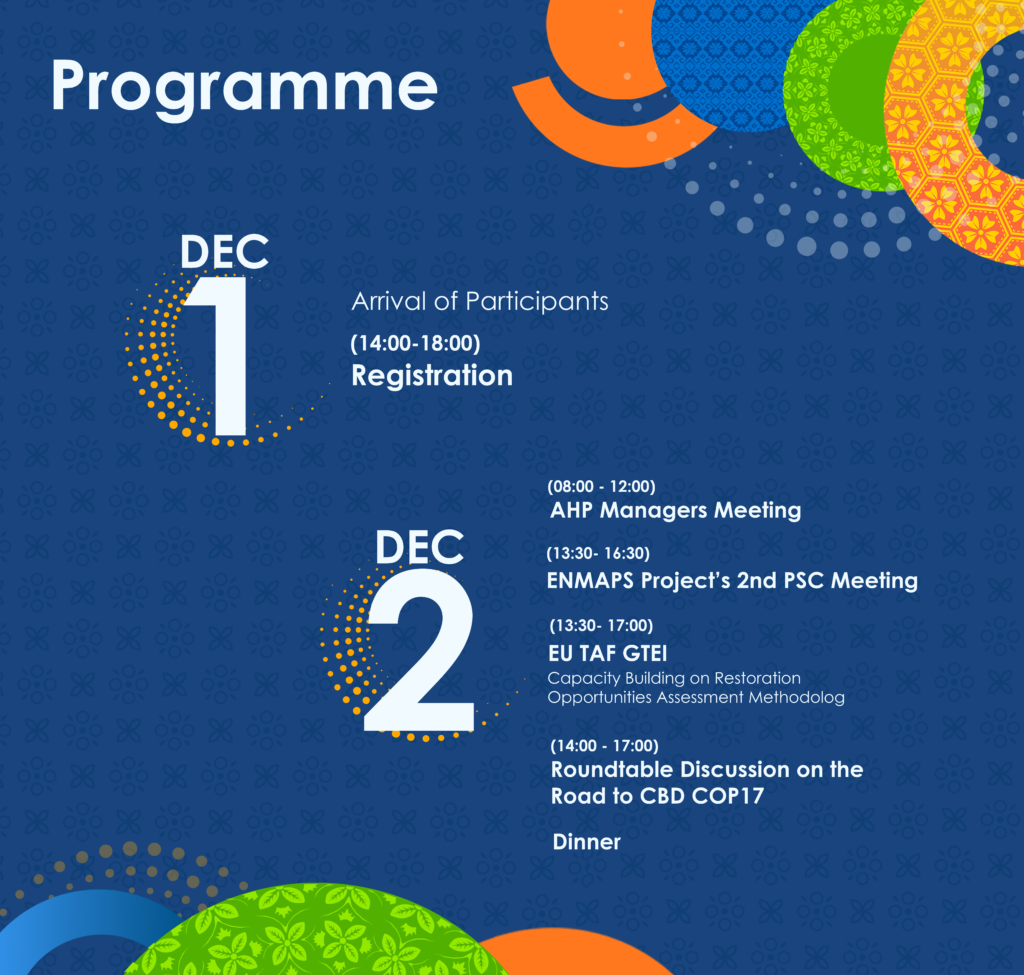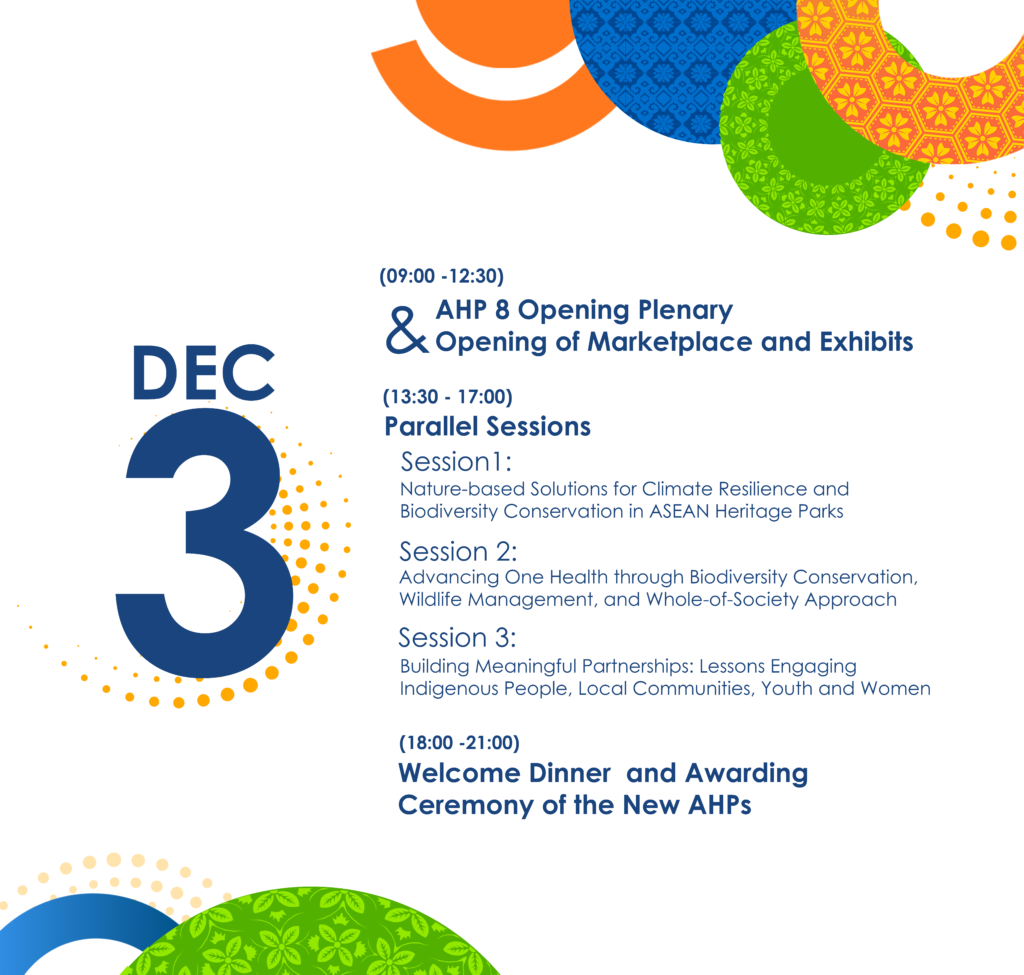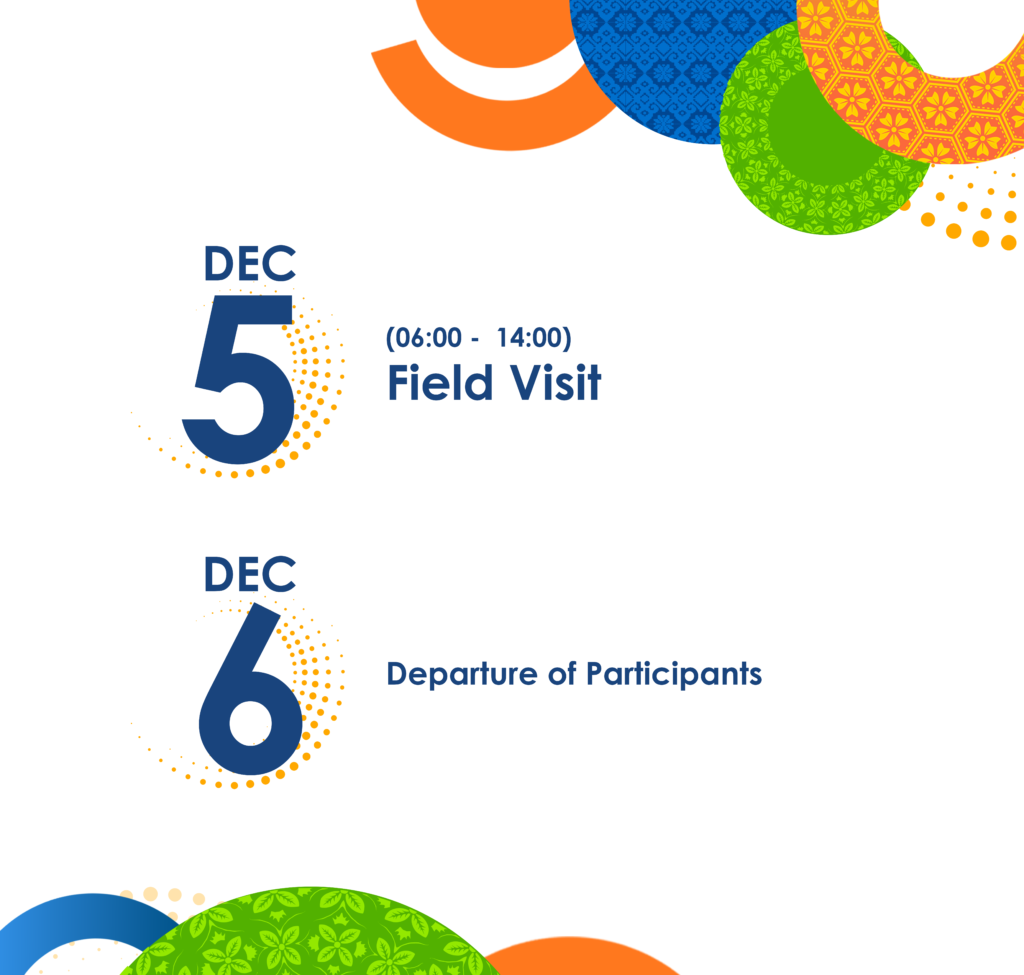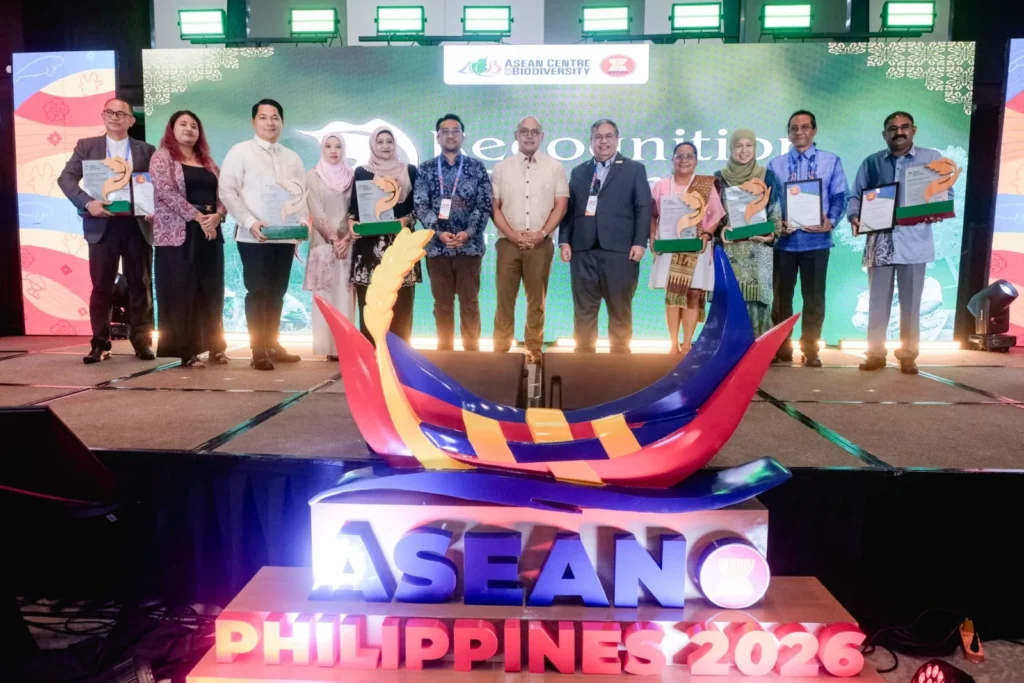
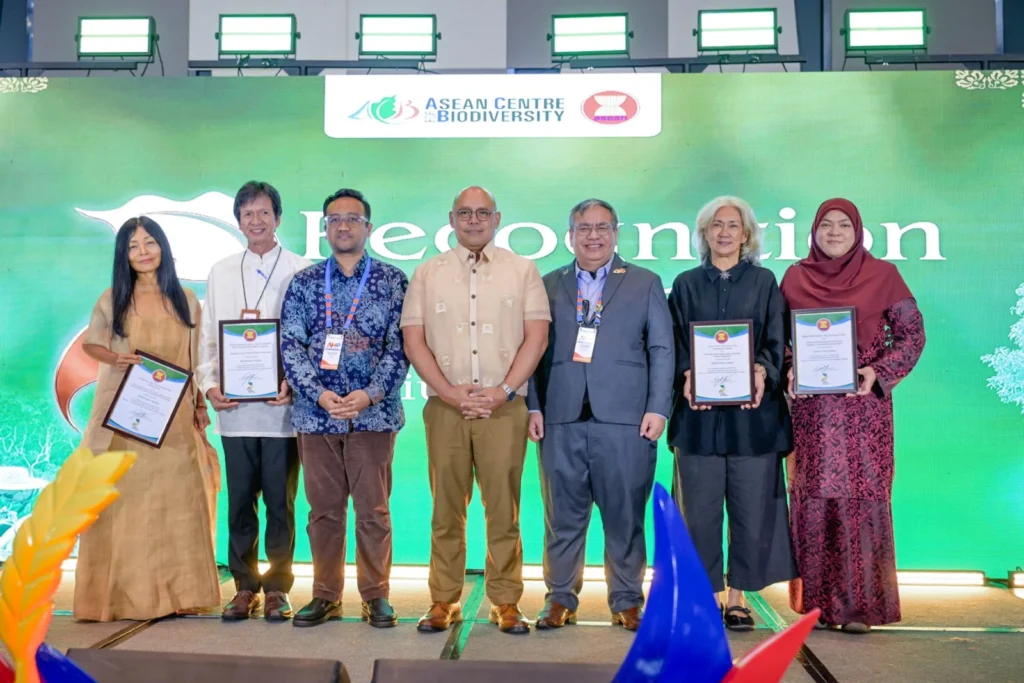
QUEZON CITY, Philippines – Coinciding with the ASEAN Heritage Parks Forum 2026, the ASEAN Centre for Biodiversity (ACB) recognised 11 people-driven initiatives as part of the ASEAN Green Initiative (AGI), a region-wide recognition programme encouraging the active participation of various sectors to increasing tree cover and ecosystem restoration.
There were four initiatives recognised for planting 101 to 5,000 trees under the Medium-Scale Category. These were: Badas Peat Swamp Tree Planting Project of the Institute for Biodiversity and Environmental Research, Universiti Brunei Darussalam; the Korbu Perak Arboretum and Rainforest Centre of the Free Tree Society Kuala Lumpur and Perak Forestry Department, Malaysia; the ALIMA Eco, Agri, and Heritage Park Development of the Tao Foundation, Nono Family, Local Indigenous Culture Bearer-Partners, Local and International Scientist-Partners in the Philippines; and Daang Kalikasan Native Trees Arboretum and Ecological Restoration Initiative by the Pangasinan Native Trees Enthusiast Incorporated, Philippines.
On the other hand, six large-scale initiatives covering over 5,000 trees were likewise recognised during the ceremony. These are: the Multi-stakeholder Ecosystem Restoration of Forests, Peatlands and Coastal Landscapes in Malaysia by the Global Environment Centre, Malaysia, the Yayasan PETRONAS One Million Trees Programme in Malaysia, the Greening Sarawak Campaign by the Forest Department Sarawak, Malaysia, the Mongkayo Pag-asa Carbon Forest by the Philippine Eagle Foundation, Luntiang Kyusi: One Million Trees Initiative by the local government of Quezon City, Philippines, and the Conservation of Community Forest to Foster a Low-Carbon Society by International Laboratories Corporation, Thailand.
A special Platinum award was also given to the OneMillionTrees Movement by Singapore for surpassing 820,000 trees planted as part of their vision to become a “City in Nature”, a key pillar under Singapore Green Plan 2030. The Movement received a Large-Scale AGI award in 2023.
According to ACB Executive Director Jerome L. Montemayor initiatives such as the AGI highlight the importance of people-driven conservation and restoration initiatives. “This is also what we must ensure as we move forward with the goal of navigating a sustainable future. Let us ensure placing people at the centre of our initiatives and continue working together in safeguarding our region’s rich natural heritage for generations to come”, Dr. Montemayor said.
The first batch of the AGI recognised in 2023, featured eight exemplary initiatives from Lao PDR, Malaysia, the Philippines, and Singapore. Together, these initiatives were able to plant more than 1.4 million trees in their respective areas.
AGI Technical Forum
Representatives of the recognised AGI initiatives also participated in a technical forum with the theme “Restoring Our Future: Biodiversity, Climate and People”. The event was a platform for AGI awardees to share their experiences, best practices, and perspectives on forest rehabilitation and ecosystem restoration to strengthen and enhance biodiversity conservation, climate resilience, and empower people.
Opening the forum, Dr. Montemayor said, “Through their presentations, we hope to learn not only about what they have achieved, but also about the approaches, challenges, partnerships, and lessons that can be shared and replicated across the ASEAN region. We hope that will encourage greater collaboration, inspire more greening initiatives, and strengthen the collective efforts of ASEAN towards a greener, more resilient, and sustainable region”.
The technical forum was composed of three streams.
First, on Rehabilitation for Biodiversity Conservation and Ecosystem Recovery, the Philippine Eagle Foundation, Yayasan PETRONAS, Forest Department Sarawak, and the Free Tree Society Kuala Lumpur and Perak Forestry Department shared how their restoration efforts have led to enhanced biodiversity, improved habitat protection, and thriving wildlife populations. The second stream, on Advancing Restoration for Climate Resilience, showcased projects like the International Laboratories Corporation’s Conservation of Community Forests, the Global Environment Centre’s multi-stakeholder restoration in Malaysia, Luntiang Kyusi: One Million Trees Initiative, and the Badas Tree Planting Project of Universiti Brunei Darussalam. Presenters also discussed strategies for carbon sequestration, science-based restoration, and supporting urban and rural resilience to climate impacts. The third stream, on Rebuilding for the People, Culture, and Heritage, highlighted the people-centred nature of the AGI, with the OneMillionTrees Movement of Singapore, the Tao Foundation’s ALIMA Eco, Agri, and Heritage Park Development, and the Pangasinan Native Trees Enthusiast Incorporated presenting approaches that blend community empowerment, cultural preservation, and environmental stewardship.