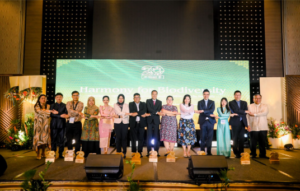
Participants of the Youth Leadership Training for Biodiversity and Wetland Conservation and Restoration with Nursery Establishment Training and Field Demonstration in Malaysia (left) and the Philippines (right) share their output during the workshop
SARAWAK, Malaysia and AGUSAN DEL SUR, Philippines — A new generation of “wetland champions” is rising to protect Southeast Asia’s critical carbon sinks.
The ASEAN Centre for Biodiversity (ACB), through the Enhancing Conservation and Restoration of Wetlands and Peatlands in ASEAN as Effective Sinks and Reservoirs of Greenhouse Gases (EnCORE Wetlands) Project, recently concluded a series of youth leadership workshops designed to secure the future of the region’s most vital ecosystems.
Supported by the UK Mission to ASEAN through the ASEAN-UK Green Transition Fund, the collaborative initiative brought together young leaders from indigenous communities, student groups, and local organisations to the frontlines of conservation, to enhance their capacities in effectively designing and carrying out wetland conservation projects and activities.
ACB Executive Director Dr. Jerome L. Montemayor welcomed the participants and highlighted the importance of their involvement in wetland and peatland conservation. “As youth representatives of the ASEAN region, it is your future on the line. You have the power to mould the future that you want. As young people with passion and abilities to contribute, you must be recognised and be meaningfully involved in decision-making and planning related to biodiversity and wetland conservation and in sustainable development,” said Montemayor. “At the ASEAN Centre for Biodiversity, we fully recognise the vital role of young stakeholders in achieving our mission to conserve, sustainably manage, and equitably share the benefits of the region’s rich biodiversity. Through the ASEAN Youth Biodiversity Programme and the EnCORE Wetlands Project, the ACB supports training programmes such as this to strengthen capacity, empower, and enable meaningful youth participation in conservation and restoration efforts in the region,” he added.
Aligning with global and regional goals
To equip them with the information needed in developing their community conservation efforts and gain insights on conservation and restoration principles, the participants were briefed on the Kunming-Montreal Global Biodiversity Framework, to which their respective National Biodiversity Strategies and Action Plans and the existing initiatives are aligned and designed to contribute to.
Additionally, an overview of the regional initiatives in the ASEAN for biodiversity conservation was also discussed, including the ASEAN Youth Biodiversity Programme and the ASEAN Green Initiative, two flagship initiatives of the ACB.
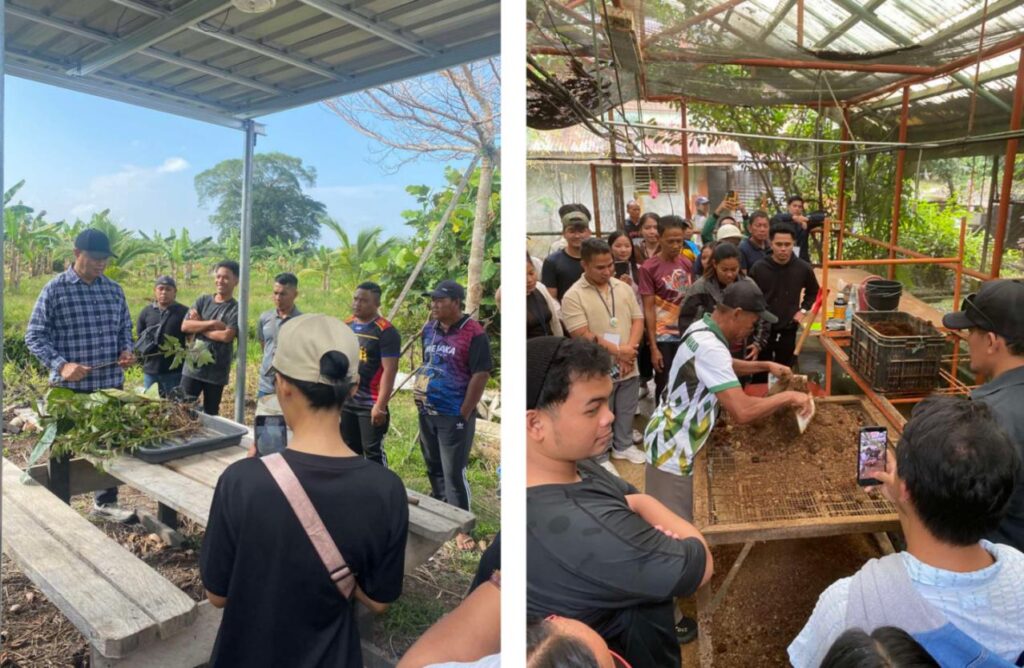
Invited experts guide the young participants on how they can establish and manage their own community nurseries using native species
Conservation rooted in systems thinking
Darry Shel Estorba, ACB’s youth and biodiversity specialist, discussed systems thinking with the young participants. The discussion was followed by hands-on exercises to identify potential solutions for various challenges their communities face with respect to the environment.
The workshops featured interactive discussions, games, and hands-on activities on communicating biodiversity, project development, and nursery establishment and management. Youth and community elders in Agusan Marsh Wildlife Sanctuary also conducted a collaborative mapping through the identification of existing tree species in the area, their traditional uses, and the observed distribution and occurrence in Agusan Marsh.
Each leg of the workshop concluded with hands-on training on native species propagation and on developing and managing a nursery. Seasoned experts were invited to share their knowledge and best practices in seedling propagation with the budding conservationists.
The EnCORE Wetlands Project is being implemented by the ACB in partnership with the Global Environment Centre. The project aims to create science-based and practical methods to protect carbon-rich ecosystems such as wetlands and peatlands to protect biodiversity in the region. -end-