Dr. Jerome L. Montemayor
Executive Director, ASEAN Centre for Biodiversity (ACB)
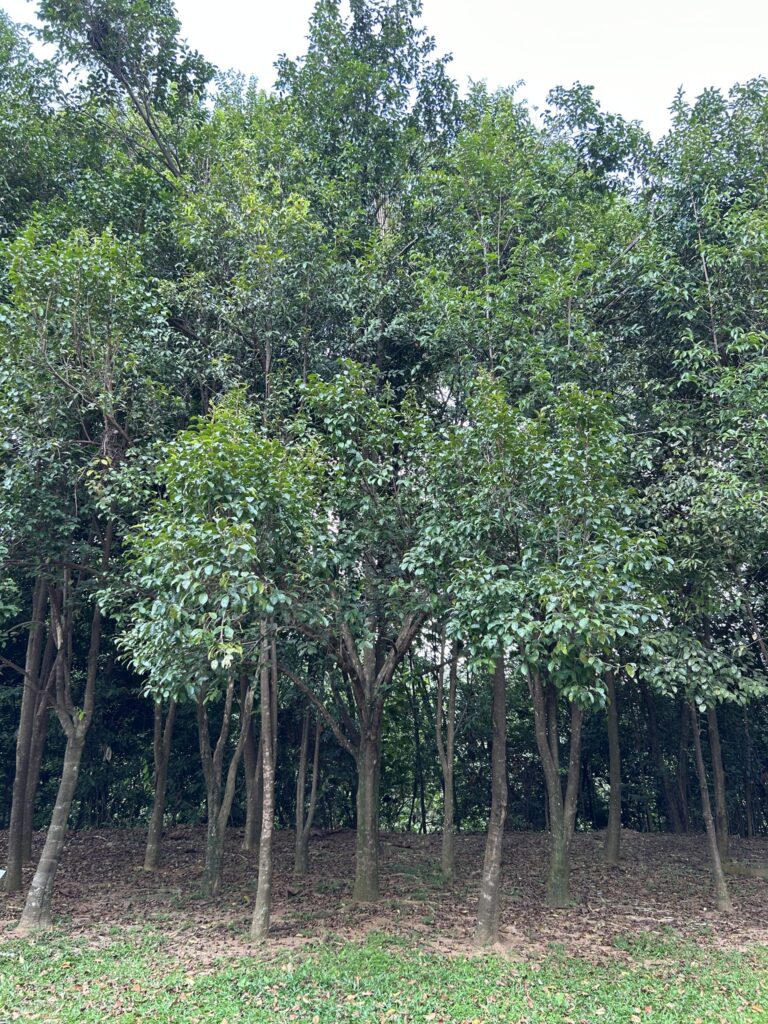
Photo by: Syafiqahazhar at iNaturalist
Have you ever heard of agarwood? It is a rare, highly fragrant, dark, resinous wood from Aquilaria trees found in tropical rainforests of Southeast Asian countries like Cambodia, Indonesia, Lao PDR, Malaysia, the Philippines, Thailand, and Viet Nam.
Aquilaria trees often appear ordinary, pale, and without value until they are wounded and infected. Under stress, its natural defence releases a dark resin that seeps into its heartwood, which then releases a rich fragrance, making it one of the most expensive raw materials for perfumes, incense, cosmetics, and aromatherapy. It is unfortunate that some are intensively and deliberately wounding agarwood to artificially trigger the infusion and be able to harvest more of its resin. This unsustainable practice should be replaced with more environmentally friendly techniques because it results in high tree mortality, lower-quality byproducts, and interruption of the normal regeneration cycle.
In addition, agarwood is also used in traditional medicine as an analgesic, a source of antioxidants, and as a treatment for gastritis, diarrhea, headache, cough, and asthma, among many others. Because of these benefits and its rarity, high-quality agarwood is valued at up to USD 100,000 per kilogram – no wonder it has earned the nickname “Wood of the Gods”!
Its numerous benefits are the boon and bane of agarwood’s existence. Its high market value is giving birth to an emerging industry, but it has also exposed this critically endangered species to poaching and illegal trade.
This World Wildlife Day 2026, the ASEAN Centre for Biodiversity (ACB) joins the global community in turning our attention to the importance of medical and aromatic plants (MAPs) like agarwood. These often overlooked natural resources are vital not only in rural healthcare but also in preserving local heritage and supporting livelihoods and economies.
These MAPs are part of Southeast Asia’s natural wealth and form our region’s biggest “medicine cabinet,” carrying actual, accessible, and affordable nature-based solutions that have supported the health and well-being of generations. According to studies, numerous biodiversity hotspots in the region are home to around 50,000 plant species and significant sources of many species that are essential in traditional medicine because of their medicinal properties. The World Health Organization estimates that 70 to 95 per cent of people in developing countries depend on traditional plant-based medicine for their primary healthcare needs. There are also reports of traditional medicine being integrated into modern healthcare policies and conventional treatments in Indonesia, Thailand, and Viet Nam. It is also projected that the herbal medicine market is expected to reach USD 104.78 billion by this year, with Southeast Asia having a big part in this expansion. This highlights the importance of our region in efforts to conserve and sustainably use MAPs. In addition to terrestrial plants, the region’s underwater ecosystems, such as its thriving coral reefs, also offer pharmaceutical value and medicinal cures. Coral reefs are also called “medicine cabinets of the sea” for being a vital source of medicinal breakthroughs. According to researchers, coral reefs contain complex substances that could fight a range of ailments such as cancer, Alzheimer’s, HIV, and chronic pain. They are a large repository of marine natural products used for developing new pharmaceuticals, treating diseases, and supporting advanced biomedical research.
However, although indispensable, this regionwide “pharmacy” is threatened due to deforestation and land conversion that destroys and decreases habitats for rare MAPs. Another concern is over-extraction, where harvesting to meet the global demand has endangered the existence of these valuable species in the wild. With such importance, collective action for the conservation of MAPs is not only an environmental goal but a social and economic responsibility as well.
As one of the world’s technical and scientific cooperation support centres for the implementation of the Kunming-Montreal Global Biodiversity Framework (KM GBF), the ACB is supporting its constituent countries in contributing to the achievement of the KM GBF targets, including Target 5 on sustainable use and trade of wild species, Target 9 on the sustainable management of wild species for the benefit of people, Target 13 on the fair and equitable sharing of benefits from genetic resources and traditional knowledge, and Target 21 on ensuring that traditional knowledge and practices are only accessed with free prior and informed consent from Indigenous peoples and local communities. At the regional level, the ASEAN Biodiversity Plan complements these efforts by enhancing coordination among the ASEAN Member States (AMS) in conserving, sustainably managing, and using biodiversity, as well as equitably sharing the benefits from using the region’s rich biological resources.
The ACB leads several flagship initiatives related to addressing challenges facing MAP species. The ASEAN Heritage Parks (AHP) Programme, a network of 69 protected areas of high conservation importance, highlights the need to ensure the protection of ecosystems, the natural habitats of many MAPs. On the other hand, the ASEAN Green Initiative, an ecosystem restoration initiative of the AMS, aims to plant at least 10 million native trees across the AMS in 10 years, in line with the UN Decade on Ecosystem Restoration.
The Small Grants Programme by the ASEAN Centre for Biodiversity (SGP) also contributed to the conservation of medicinal plants by supporting the survey and database of medicinal plants in Kon Ka Kinh National Park in Viet Nam. At least 120 high-valued medicinal plants were recorded, and a book of medicinal plants was developed at the end of the project.
In addition, the ACB is also working on mainstreaming biodiversity in other sectors, such as in medicine, healthcare, and wellbeing. It is also beefing up the ASEAN Traditional Knowledge Digital Library (TDKL), an output of the “ASEAN-India Cooperation Project” of the National Biodiversity Authority, India, and the ACB. The ASEAN TKDL serves as an accessible platform for the digitised documentation of publicly available traditional knowledge, particularly on medicinal plants in Southeast Asia.
On this World Wildlife Day, the ACB calls on everyone – governments, the private sector, different individuals, especially the youth of ASEAN – to recognise and appreciate the value of these MAPs, continue advocating for the sustainable use of these natural resources, and work with us through our different initiatives to ensure that our natural “pharmacy” is always well-stocked. More importantly, this is an opportune moment for us to revisit the age-old proverb, “the greatest wealth is health.” This truth resonates not just for the health of individual people but, more importantly, for the health of the planet we all call home.